

You paid for the click. They visited your website. They looked around, maybe even read your services page or checked your pricing. And then they left — without calling, without filling out a form, without becoming a customer.
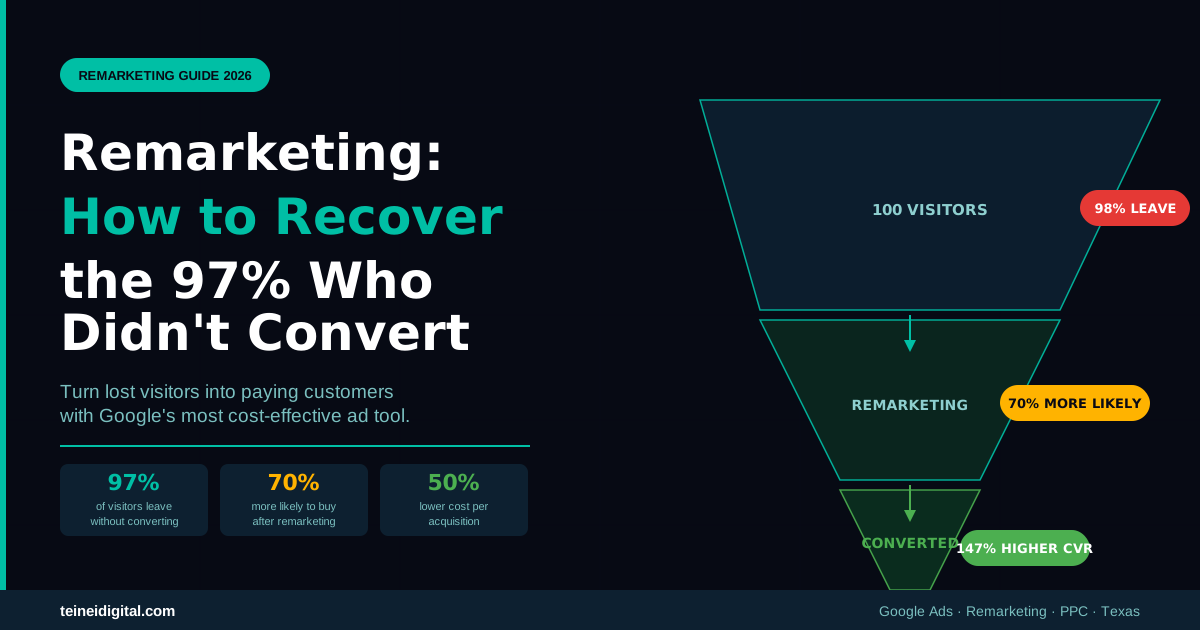
The numbers don’t lie: only 2% of website visitors convert on their first visit. That means 98% of your potential customers are slipping through your fingers. Fetch & Funnel
For most business owners, that statistic feels discouraging. But here’s the reframe: those visitors already know who you are. They already showed interest. They’re not cold strangers — they’re warm prospects who just need another touchpoint to convert. And remarketing is exactly how you give them that touchpoint.
This guide explains exactly what Google Ads remarketing is, how it works, the different types available, and how to set up a strategy that turns your lost visitors into paying customers — often at a fraction of what it cost to get them to your website in the first place.
What Is Google Ads Remarketing?
Remarketing is a Google Ads feature that lets you show targeted ads to people who have previously visited your website or interacted with your business online — as they browse other websites, watch YouTube videos, check Gmail, or search on Google again.
Think of it as a second chance — or a third, or a fourth — to make your case to someone who already showed interest. The difference between remarketing and regular advertising is fundamental: you’re not interrupting strangers. You’re following up with people who raised their hand.
Retargeted users are up to 70% more likely to convert, making remarketing one of the most effective ways to increase conversions and ROI. It helps businesses maximize ad spend by focusing on users already familiar with the brand. Customdigitalsolutions
How Remarketing Works: The Technical Side (Simply Explained)
The mechanics of remarketing involve three components that work together automatically once set up.
The first is the remarketing tag — a small piece of code you install on your website. This tag fires whenever someone visits a page on your site and adds them to an audience list in your Google Ads account. It works invisibly in the background and requires no action from your visitors.
The second is audience lists — the groups of past visitors that Google builds from the tag data. You can create different lists based on specific behaviors: people who visited your homepage, people who visited your services page, people who reached your contact form but didn’t submit it, and so on.
The third is remarketing campaigns — the ads you show to those audience lists. These can appear as banner ads across millions of websites in Google’s Display Network, as video ads on YouTube, or even as customized search ads when past visitors search on Google again.
The Google Display Network can show your remarketing ads to more than 2 million websites on the internet, reaching as much as 90% of internet users. This gives you an extraordinary reach compared to social media platforms where visibility is limited to users actively on that platform. Replug
The 5 Types of Google Remarketing — And When to Use Each
Standard Remarketing
This is the most common type. Display ads appear to past visitors as they browse other websites across the Google Display Network. It’s ideal for brand awareness, staying top of mind, and reaching a broad segment of past visitors.
Best for: Service businesses, local businesses, any business that wants to maintain visibility with website visitors over time.
Remarketing Lists for Search Ads (RLSA)
This powerful but underused type lets you customize your regular Google Search campaigns specifically for past visitors. When someone who previously visited your site searches for your services on Google, you can show them a different ad, bid more aggressively for their click, or even show ads for keywords you wouldn’t bid on for cold traffic.
RLSA allows you to target broader, more expensive keywords exclusively for your remarketing audiences. Keywords that might be too costly or irrelevant for cold traffic become viable when you’re only targeting people who have already expressed interest in your business. Proper Marketers
Best for: Service businesses and local businesses where the same person might search multiple times before making a decision.
Dynamic Remarketing
Dynamic remarketing automatically shows ads featuring the specific services or products a visitor viewed on your site. If someone browsed your HVAC maintenance page, they see an ad for HVAC maintenance specifically — not a generic ad about your company.
According to Google, dynamic remarketing can increase click-through rates by 2x compared to static ads because it’s highly relevant and personalized. Trigacy Agency
Best for: E-commerce businesses, service businesses with multiple distinct offerings, and any business where personalization significantly improves relevance.
Video Remarketing
Video remarketing shows ads on YouTube to people who have previously visited your website or interacted with your YouTube channel. This is particularly powerful for businesses that want to build trust and tell a story — a 30-second video testimonial from a satisfied customer shown to someone who just visited your website is extraordinarily persuasive.
Best for: Businesses with longer sales cycles, professional services, any business where trust is a key conversion factor.
Customer List Remarketing
This type lets you upload your existing customer email list or phone number list to Google Ads and show ads specifically to those people as they browse Google’s network. This is ideal for re-engaging past customers, promoting new services to existing clients, or running loyalty campaigns.
Best for: Businesses with established customer bases looking to generate repeat business or upsell existing clients.
Why Remarketing Delivers Such Strong ROI
The economics of remarketing are fundamentally different from cold traffic advertising — and dramatically more favorable.
When you run a standard Google Search campaign, you’re competing for the attention of someone who has never heard of you. They see your ad alongside two or three competitors. They have no reason to trust you over anyone else. Your job is to convince a complete stranger to call you in one ad.
With remarketing, the dynamic is completely different. The person already knows your business. They already considered you. They just need a reason to come back — a reminder, a testimonial, a specific offer, or simply seeing your brand at the moment they’re ready to act.
Remarketing campaigns can achieve 147% higher conversion rates than standard campaigns because you’re reaching people who have already shown interest in your brand. Fetch & Funnel
Businesses using strategic remarketing campaigns often see conversion rates 2–3 times higher than standard display advertising, with costs per acquisition dropping by as much as 50%. Proper Marketers
Combined with the fact that Display Network CPCs are typically under $1 — compared to $5 to $25 for Search clicks in competitive Texas markets — remarketing represents one of the highest-ROI advertising investments available to small businesses.
Building a Remarketing Strategy That Actually Converts
The most common remarketing mistake is treating all past visitors the same. Someone who spent 30 seconds on your homepage and someone who spent 10 minutes reading your services page and filling out half a contact form are very different prospects — and they should see very different ads.
Effective remarketing starts with audience segmentation. Here are the key segments every Texas service business should build.
All website visitors — the broadest list, used for general brand awareness campaigns. Show these visitors ads that remind them of your core value proposition and make it easy to contact you.
Services page visitors — people who looked at specific services. Show them ads specific to what they viewed. If they visited your AC repair page, show them an AC repair ad — not a general HVAC ad.
Contact page visitors who didn’t submit — these are your hottest prospects. They were close to reaching out but something stopped them. Show these visitors ads with a strong call to action, a special offer, or social proof like reviews and testimonials.
Blog or content readers — people in early research mode. These visitors need nurturing, not a hard sell. Show them educational content that positions you as the expert and builds trust over time.
Not all visitors are the same. Segmenting your audience improves relevance and performance. Segmentation allows you to deliver personalized messaging that increases engagement and conversions. Dmb
Setting the Right Frequency and Duration
Two settings that most businesses get wrong in remarketing campaigns are frequency capping and audience duration.
Frequency capping controls how many times the same person sees your ad per day or per week. Showing someone your ad 15 times in a single day doesn’t build trust — it builds irritation. A good starting point is 3 to 5 impressions per day for most service businesses, adjusted based on your campaign performance data.
Audience duration controls how long someone stays on your remarketing list after visiting. For emergency services like HVAC or plumbing, 7 to 14 days is appropriate — the need is urgent and either they’ve already hired someone else or they still need help. For higher-consideration services like legal representation or major home renovation, 30 to 90 days better reflects the longer decision-making cycle.
Setting duration too long wastes budget on people who made their decision months ago. Setting it too short misses people who are still in their consideration phase.
Writing Remarketing Ads That Bring People Back
Remarketing ads need to be different from your standard acquisition ads. The person already knows you — don’t introduce yourself again. Instead, address why they might not have converted the first time and give them a compelling reason to come back.
The most effective remarketing ad frameworks for Texas service businesses include urgency and offers (“Still need HVAC service? Book this week and save $50”), social proof (“Join 200+ happy Houston homeowners — 5 stars on Google”), direct calls to action (“Ready to get your free estimate? We’re available today”), and trust reinforcement (“Licensed, insured, and Google Guaranteed in Texas”).
The key is that every remarketing ad should feel like a natural follow-up — a helpful nudge from a business they’ve already considered, not another cold sales pitch.
Combining Remarketing With Your Other Campaigns
Remarketing doesn’t replace your primary Google Ads campaigns — it amplifies them. Every click you buy through Search or LSA that doesn’t convert immediately becomes a potential remarketing candidate. The more traffic your primary campaigns generate, the larger your remarketing audiences grow, and the more efficiently your remarketing budget works.
Google captures high-intent users actively searching for your offer. Remarketing lets you follow up, retarget visitors, nurture interest, and stay visible. The strongest strategy captures high-intent traffic with Google Ads first, then retargets on the Display Network to stay top of mind and drive conversions. Swydo
This combination consistently shortens the sales cycle. Someone who might have taken two or three weeks to decide hears from you again three days after their visit — and books the appointment they were already considering.
Getting Started: The Minimum Setup for a High-Performing Remarketing Campaign
If you’ve never run remarketing before, here’s the minimum viable setup to get started.
Install the Google Ads tag across your entire website — not just one page. Create at minimum three audience lists: all visitors, services page visitors, and contact page visitors. Set up a Display remarketing campaign targeting your all-visitors list with a daily budget of $5 to $15. Set up a second, slightly higher-budget campaign targeting your contact page visitors who didn’t submit — these are your most valuable prospects and deserve the most aggressive remarketing.
Run both campaigns for 30 days, review which audience segments and ad creatives are generating the most conversions, and adjust accordingly.
Conclusion: Remarketing Is the Smartest Budget in Your Google Ads Account
Most businesses spend the majority of their ad budget trying to find new customers. Remarketing shifts some of that investment toward the people who already found you — and the returns are consistently superior.
Google Ads remarketing activity tends to have a higher ROI due to lower cost. The target audiences are users who have moved further down the marketing funnel, at the Interest, Consideration, or Intent stages — making them significantly more likely to convert than cold audiences. Growthmindedmarketing
For Texas service businesses investing in Google Ads, remarketing should be a non-negotiable component of every campaign structure. The visitors are already there. The interest is already established. Remarketing simply ensures that interest doesn’t go to waste.
At Teinei Digital, we build remarketing strategies that work alongside your primary campaigns to maximize every dollar you invest in bringing people to your website — making sure the ones who leave come back.
Set up your remarketing campaign — get a free audit →
Questions about Google Ads remarketing? Leave a comment or contact us directly.
Related posts: How Much Does Google Ads Cost in 2026? · 5 Mistakes Destroying Your Google Ads Campaigns · Google Ads vs. Facebook Ads in 2026