

It’s one of the most common questions we hear from business owners ready to invest in digital advertising: “Should I run Google Ads or Facebook Ads?” And the honest answer is that it depends — but that doesn’t mean there isn’t a clear answer for your specific type of business.
Both platforms are powerful. Both can generate real leads and revenue. But they work in fundamentally different ways, serve different moments in the customer journey, and deliver very different results depending on your industry, budget, and goals.
In this complete 2026 comparison, we break down exactly how Google Ads and Facebook Ads differ, what the numbers say, and which platform — or combination — is the right choice for your business.
The Core Difference: Intent vs. Discovery
Before comparing costs and conversion rates, you need to understand the fundamental philosophical difference between these two platforms. Everything else flows from this.
Google Ads is more effective at capturing search intent, while Facebook Ads excels at attracting and educating audiences who aren’t actively searching yet. Stackmatix
Think about it this way. When someone types “emergency plumber Houston” into Google, they have a problem right now and they need a solution immediately. That’s intent — and Google Ads puts your business directly in front of that person at the exact moment they’re ready to act.
Facebook Ads work completely differently. Someone scrolling through their Facebook or Instagram feed wasn’t looking for a plumber. They weren’t looking for anything. But if you show them a compelling ad at the right moment, you can create awareness, build interest, and eventually convert them into a customer — it just takes longer.
This distinction determines everything: which platform you should prioritize, how you should measure success, and what kind of results to expect.
The Numbers: A Side-by-Side Comparison for 2026
Let’s look at the hard data. Here’s how the two platforms compare on key metrics:
| Metric | Google Ads | Facebook Ads |
|---|---|---|
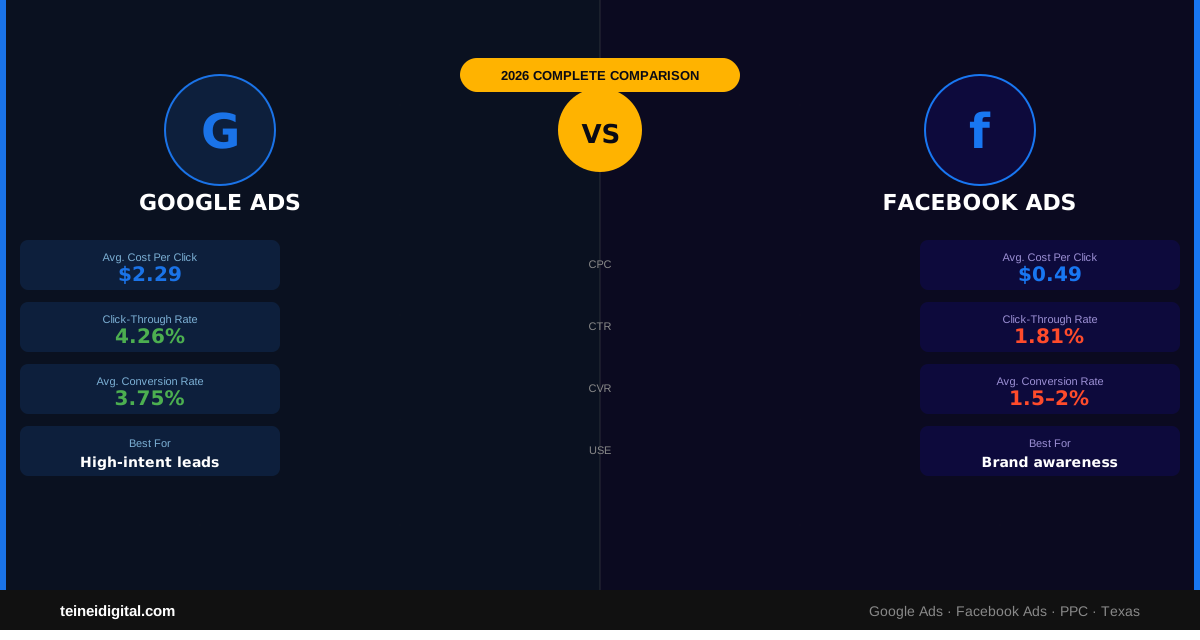
| Average CPC | $2.29 | $0.49 |
| Click-Through Rate | 4.26% | 1.81% |
| Avg. Conversion Rate | 3.75% | 1.5–2% |
| Monthly Budget (Typical) | $1,368 | $1,026 |
| Intent Level | High | Low to Medium |
| Best For | Ready-to-buy customers | Awareness and audience building |
The median CPC is higher on Google Ads at $2.29 versus Facebook Ads at $0.49, yet Google’s CTR is significantly stronger at 4.26% compared to 1.81%, reflecting deeper purchase intent. Agencies typically allocate about 57% of the ad budget to Google and 43% to Facebook. AgencyAnalytics
The takeaway from these numbers: Google costs more per click, but those clicks convert at a much higher rate because the person clicking was actively searching for what you offer. Facebook clicks are cheaper, but more people are browsing casually rather than ready to buy.
When Google Ads Wins
Google Ads is the clear choice — and often the only choice that makes sense — in these situations.
You offer a service people search for urgently. If your business provides something people need when something goes wrong — plumbing, HVAC, electrical, legal representation, medical services, auto repair — Google Search Ads are unmatched. When someone searches “AC not working Dallas,” they need help today. There is no better place to be than the top of Google at that moment.
You’re a local service business. For contractors, dentists, lawyers, cleaning services, pest control, and similar businesses in Texas, Google Ads and Local Service Ads deliver the most direct path from ad to phone call. Google Ads should be the primary platform for local services because search intent is extremely strong. Stackmatix
Your customers are actively comparison shopping. When someone searches “best HVAC company in Austin” or “Google Ads agency Texas,” they’re in research mode with purchase intent. Google Ads and a well-optimized landing page capture these customers efficiently.
You need leads immediately. Google Ads can generate calls and form submissions from day one. Facebook Ads typically require weeks of learning and audience building before they perform at their best.
When Facebook Ads Wins
Facebook Ads have real advantages that Google can’t match in certain scenarios.
You sell a visual product or lifestyle brand. If your product needs to be seen to be desired — clothing, furniture, food, fitness, beauty, home décor — Facebook and Instagram’s visual ad formats are far more powerful than text-based search ads.
You want to build brand awareness before people search. Facebook lets you reach people before they have a problem. For businesses that want to be the first name someone thinks of when they do have a need, Facebook brand awareness campaigns are highly cost-effective at scale.
Your target audience is highly specific. Facebook’s demographic and interest targeting is remarkably precise. If your ideal customer is “married women aged 35–50 in the San Antonio area interested in home renovation,” Facebook can reach that audience directly. Google can only show ads to people who are actively searching.
You want lower barrier to entry for testing. Facebook Ads is generally more beginner-friendly with lower minimum budgets — you can start testing with as little as $5 per day. Stackmatix Google Ads has a steeper learning curve with keyword research and bid management.
The Real Winner: Using Both Together
Here’s what the data and the most successful advertisers consistently show: the businesses generating the best ROI in 2026 aren’t choosing between Google Ads and Facebook Ads. They’re using both in an integrated strategy that covers every stage of the customer journey.
Google Ads and Facebook Ads aren’t rivals — they’re complementary tools that solve different parts of the same puzzle. Google captures high-intent users actively searching for your offer. Facebook lets you follow up, retarget visitors, nurture interest, and stay visible. Swydo
Here’s what the full-funnel strategy looks like in practice. A potential customer first sees your Facebook ad while scrolling — they notice your business but don’t click. A few days later, they have a problem that relates to your service and search on Google — your Google Ad appears and they click. They visit your website but don’t call. That evening, they see your retargeting ad on Instagram — and this time they book a consultation.
Without Facebook, you never created the initial awareness. Without Google, you missed them at the moment of highest intent. Together, the two platforms shortened the sales cycle and closed the deal.
Most small businesses see the best ROI when the platforms work together. Google captures the ready-to-buy audience, while Facebook nurtures everyone else. Start with Google Ads if you need leads immediately. Use Facebook Ads to build brand awareness and retarget website visitors. Truesocialmarketing
How to Split Your Budget Between the Two Platforms
If you decide to run both, the budget allocation depends on your primary goal.
For businesses that primarily need leads and conversions right now, a 70/30 split with Google Ads as the dominant channel is the right starting point. For businesses building a brand or launching a new product where awareness matters more, a 50/50 or even 40/60 split favoring Facebook may make more sense.
For sales-led goals and bottom-of-funnel demand, skew 60–75% toward Google Ads. For brand awareness or creative testing at the top of the funnel, tilt 60–70% toward Facebook Ads. AgencyAnalytics
The smartest approach is to start with one platform, achieve profitability, then expand to the other. For most Texas service businesses, that means starting with Google Ads — establishing a consistent lead flow — and then adding Facebook as a remarketing and awareness layer once the core business is stable.
Industry-Specific Recommendations for Texas Businesses
Home services (HVAC, plumbing, electrical, roofing, pest control): Google Ads and Local Service Ads first. These industries have the highest search intent. Facebook can be added for seasonal promotions and brand awareness.
Legal and professional services: Google Ads dominates. People search for lawyers and accountants when they have an immediate need. High CPCs are justified by high client lifetime value.
Restaurants and food businesses: Facebook and Instagram first. Food is visual, social, and discovery-driven. Google can support with “near me” searches.
Retail and e-commerce: Both platforms work well. Use Facebook for product discovery and visual storytelling, Google for capturing buyers who are already searching for your product category.
B2B services: Google Ads for bottom-of-funnel intent capture. Facebook and LinkedIn for awareness and nurturing longer sales cycles.
Conclusion: Stop Asking Which Is Better — Start Asking Which Is Right For You
The Google Ads vs. Facebook Ads debate misses the point. The real question is: where are your customers, and at what stage of the decision process can you best reach them?
For most Texas local service businesses, Google Ads is where you start — because your customers are actively searching for what you offer right now, and being visible at that moment is the highest-leverage advertising investment you can make.
Once your Google Ads are generating consistent, profitable leads, Facebook becomes your amplifier — keeping your brand visible, re-engaging visitors who didn’t convert, and reaching new audiences before they even know they need you.
At Teinei Digital, we build integrated strategies that use both platforms intelligently — starting with what generates leads now, and layering in what builds your brand for the long term.
Get your free PPC audit and platform recommendation →
Questions about which platform is right for your business? Leave a comment or contact us directly.
Related posts: How Much Does Google Ads Cost in 2026? · Google Ads for Local Businesses in Texas · 5 Mistakes Destroying Your Google Ads Campaigns